Thank you for writing to us. One of our executive will reach back to you through your submitted medium. In case there’s an urgency, feel free to connect over WhatsApp for faster response.
Prefer calling? Dial +9108048091287 (International callers) or 08048091287 (Indian callers).
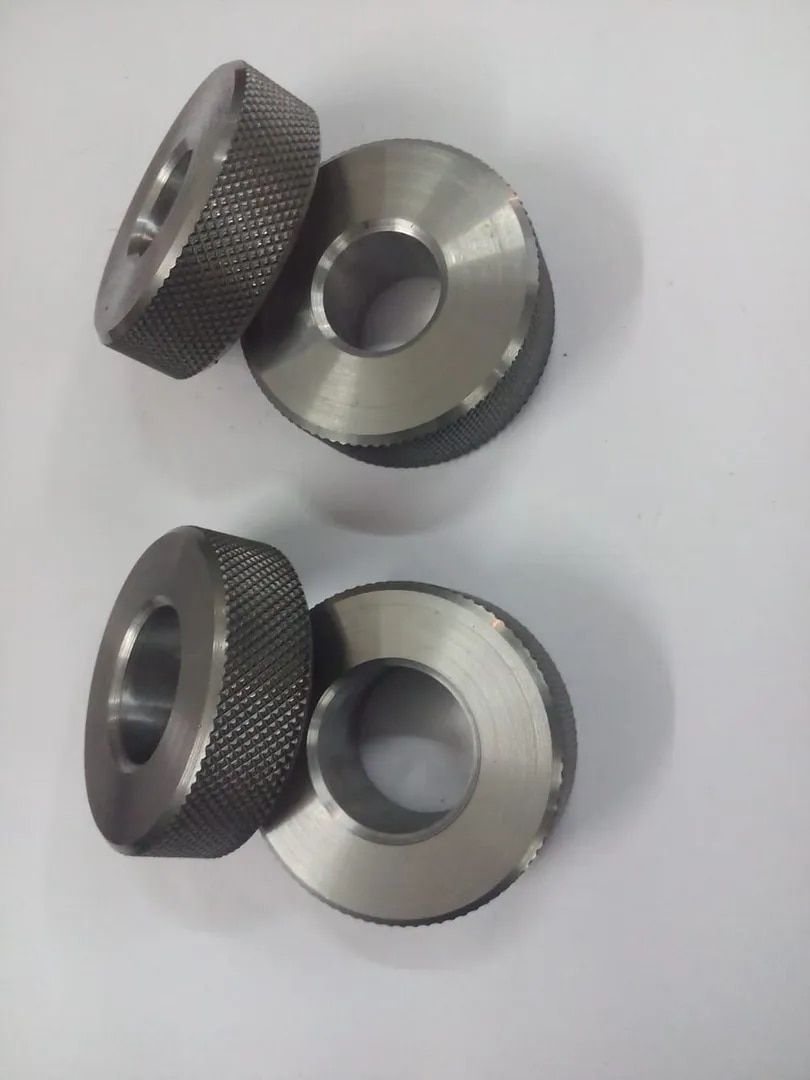
A ring gauge is a precision measurement tool used to check the external dimensions of cylindrical objects, such as the outer diameter of a round part or a shaft. Ring gauges are designed to ensure that the diameter of the measured object falls within specified tolerance limits.
Here are some key points about ring gauges:
Design: A ring gauge consists of a cylindrical ring with an accurately machined internal diameter. The internal diameter of the ring corresponds to a specific nominal size or a predetermined tolerance.
Measurement Process:
The object being measured, such as a shaft or a cylindrical part, is passed through the ring gauge.
If the object fits easily through the ring gauge without resistance, it indicates that the diameter of the object is within the acceptable tolerance range.
If there is resistance or if the object doesn't fit through, it suggests that the diameter is larger than the internal diameter of the ring gauge.
Tolerance Verification: Ring gauges are used to verify that the external dimensions of the measured object meet the specified tolerances.
Material: Ring gauges are typically made from hardened and precision-ground steel to ensure durability and accuracy.
Applications: Ring gauges are widely used in manufacturing, machining, and quality control processes where precise measurements of cylindrical parts are essential.
Ring gauges come in sets, each ring corresponding to a specific diameter or tolerance range. They are crucial tools for maintaining the accuracy and quality of machined components, ensuring that they meet the required specifications.
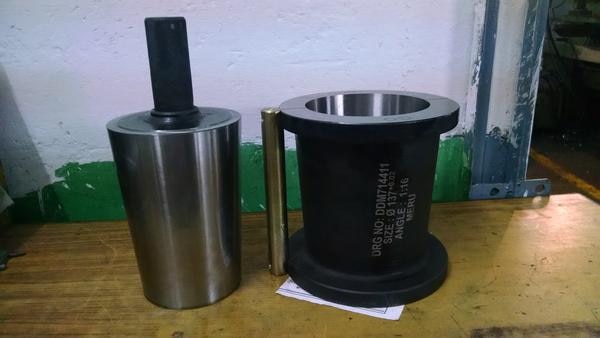
At Meru Precision Industries, we design and manufacture high-accuracy assembly fixtures tailored to meet demanding industrial requirements.
This fixture is engineered to ensure consistent assembly, reduced operation time, and error-free alignment of components during production.
Our assembly fixture is developed using best-in-class engineering practices, backed by years of expertise in gauge design, tool design, and precision manufacturing.
Jigs and fixtures are both types of specialized tools used in manufacturing processes, particularly in machining, assembly, and inspection operations.
We are expertized in manufacturing of jigs and fixtures according to our customer requirements.
A taper plug gauge is a precision measurement tool used to check the internal taper of a hole or a conical recess. It is designed to ensure that the internal surface of a tapered hole meets specified dimensional requirements. Taper plug gauges are commonly used in industries where precise taper angles are critical, such as in machining, tool and die making, and various manufacturing processes.
Here are some key points about taper plug gauges:
Design: Taper plug gauges typically consist of a tapered rod or plug with a specific angle that matches the required taper. The gauge is designed to fit into the tapered hole or recess being measured.
Measurement Process:
The taper plug gauge is inserted into the tapered hole.
The fit of the gauge within the hole is assessed to determine if it meets the specified taper angle.
Verification of Tolerance: Taper plug gauges are used to verify that the taper of the internal surface falls within acceptable tolerance limits.
Applications: They are commonly used in applications where tapered holes need to be accurately machined, such as in the production of machine tool components, bearings, and various precision engineering applications.
Material: Taper plug gauges are typically made from hardened and precision-ground steel to ensure accuracy and durability.
Taper plug gauges play a crucial role in maintaining the quality and precision of machined components with tapered features. Like other types of gauges, they contribute to quality control processes by ensuring that the manufactured parts conform to the specified design and dimensional requirements.