Bengaluru
08048091287
+919986465377

'rotational motion'

Items tagged with 'rotational motion'

6814772a5d263414004dd4a4 Card 2

product image
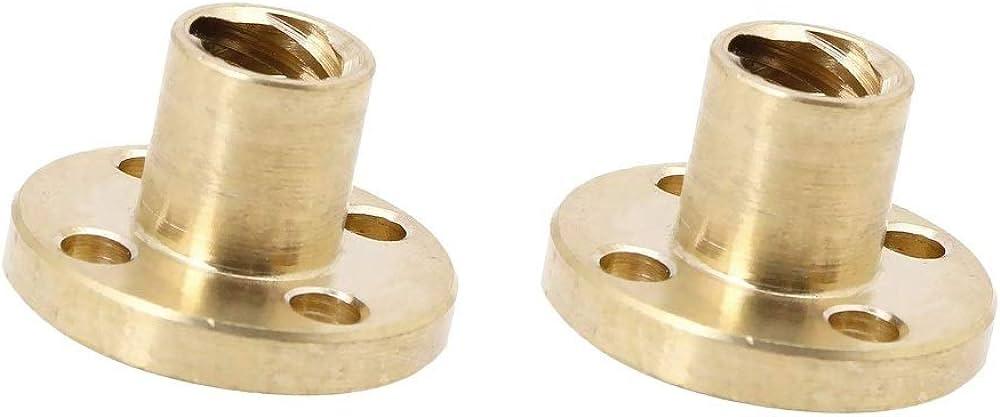
Granite Machinery Parts

Description: Lead nuts are mechanical components used with lead screws,both of which are used to convert rotational motion into linear motion. We specialize in making custom lead nuts according to customer requirements. The customer can send us the drawing or tell us orally what their requirements are. We will produce the drawing accordingly, and after getting confirmation on the drawing, we will produce the sample parts. Once we get approval for sample parts, we will go ahead with production. Material Used: Phosphorus Bronze Application: Laboratory and life science equipment including DNA sampling Fluid handling devices Paper processing machines Engraving Rapid prototyping Bottle labelling Construction machinery Data storage Filing systems Inspection Component mixing Heavy lifting applications Miniature 3D printers Book scanners

6814772a5d263414004dd4a4 Card 2

product image
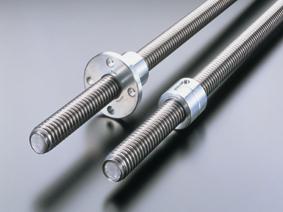
Lead Screw and Nut

A lead screw and nut assembly is a mechanism used to convert rotary motion into linear motion. This combination is commonly employed in various applications, including machinery, tools, and devices where controlled linear movement is required. Here's an overview of the lead screw and nut: Lead Screw: The lead screw is a threaded rod typically made of metal, with a continuous helical thread along its length. The helical thread on the lead screw can have various profiles, such as square, trapezoidal, or acme, depending on the application. The rotation of the lead screw results in axial (linear) motion, making it useful for positioning and moving objects. Nut: The nut is a block or component with an internal threaded hole that matches the thread on the lead screw. The nut is attached to the object that needs to move linearly, and it engages with the lead screw's threads. As the lead screw rotates, the nut moves along the screw, translating the rotational motion into linear motion. Functionality: When the lead screw is rotated, it causes the nut to move along its length. The pitch of the lead screw determines how far the nut will move for each revolution of the lead screw. This mechanism provides a simple and efficient way to convert rotary motion from a motor or manual input into precise linear motion. Types of Threads: Acme Threads: Commonly used in lead screw and nut assemblies due to their efficiency and load-carrying capacity. Square Threads: Less common but still used in certain applications. Trapezoidal Threads: A compromise between acme and square threads, offering good efficiency and strength. Applications: Lead screw and nut assemblies are found in various machines and devices, including CNC machines, 3D printers, milling machines, and other precision equipment. They are used for tasks that require controlled and accurate linear movement, such as moving tool heads, adjusting the position of components, or controlling the position of a load.

Still searching for
rotational motion?